Choosing a screen protector: tempered glass or film?
Glass feels like the screen, film flexes with it. Here is how to choose the screen protector that suits your phone, with or without a privacy filter.
Popular picks from this guide
-
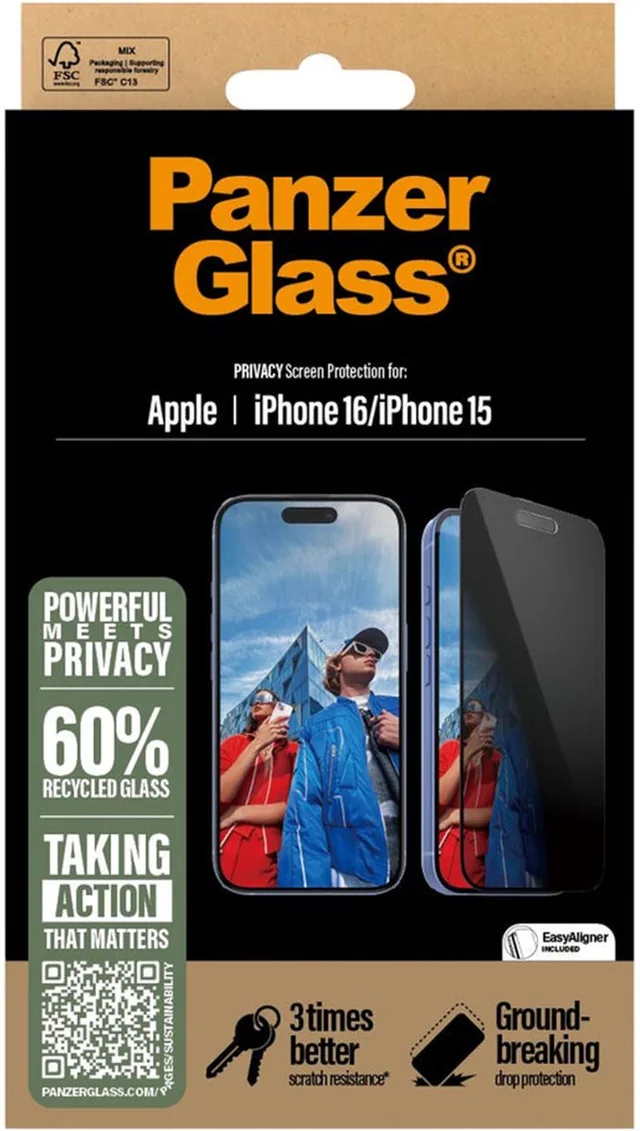
PanzerGlass Screen protector for Apple iPhone 16, glass, PanzerGlass Ultra-Wide Fit Privacy Screen Protector, Case Friendly, blackGo to TechInn
From €24.98 · at 4 shops
Lowest in 24 days
-
PanzerGlass Screen protector for Apple iPhone 16, glass, PanzerGlass Ultra-Wide Fit Screen Protector, Case FriendlyGo to TechInn
From €22.48 · at 4 shops
-
PanzerGlass Screen protector for Apple iPhone 16 Pro, glass, PanzerGlass Ultra Wide Fit Screen Protector, Case FriendlyGo to TechInn
From €33.48 · at 5 shops
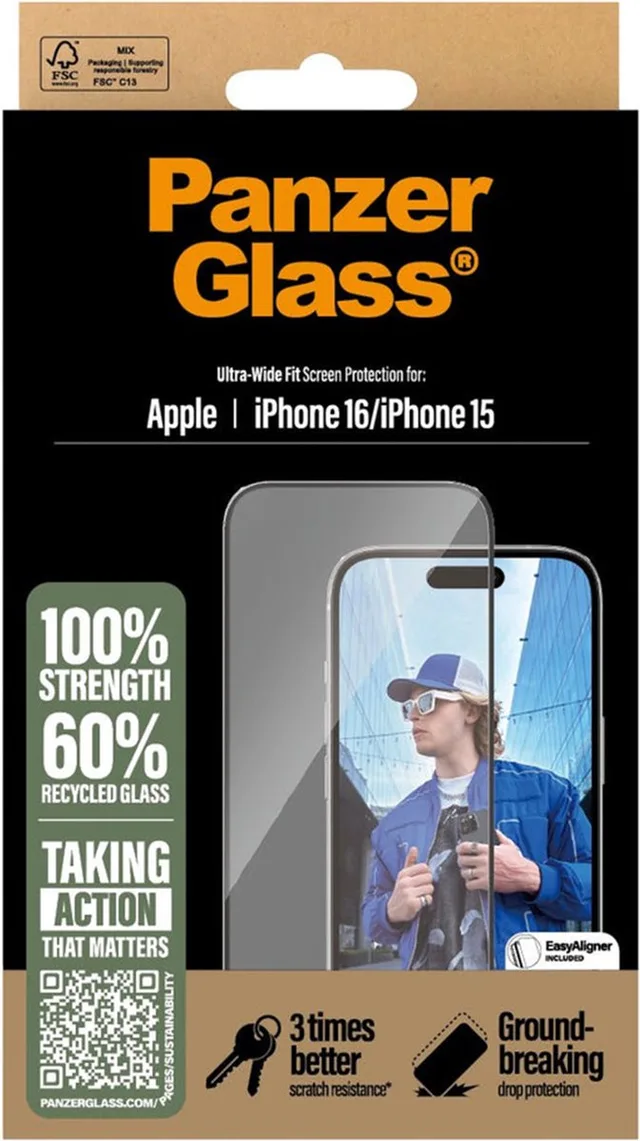
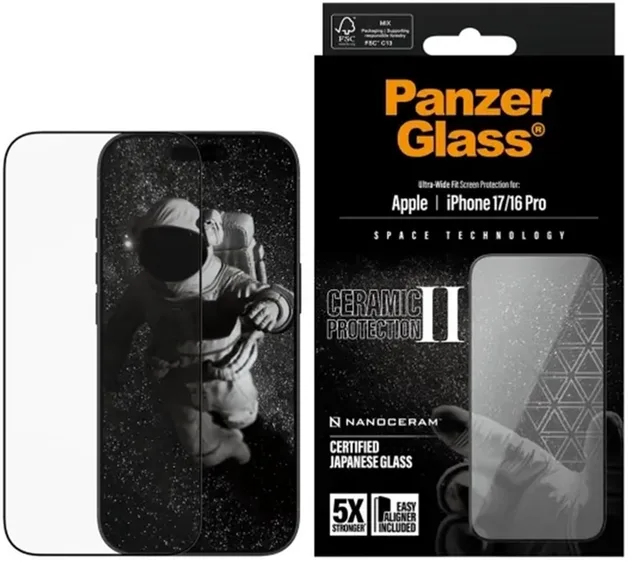
Popular products at today's lowest price. Compare every shop on the product page.
Short answer: For an ordinary phone with a flat screen you usually choose tempered glass: it feels like the screen itself and takes scratches and knocks. Film (TPU or hydrogel) is thinner and flexes, which makes it the choice for curved edges and for the inner screen of a foldable. Also look for "case friendly", a privacy filter if you want one, and the fingerprint sensor.
The facts below come from the makers, such as PanzerGlass, Spigen and Samsung, and from the product names in our catalogue. Tenbars tests no screen protectors itself. A screen protector is always made for one model: check that the name says your phone.
Tempered glass
Tempered glass is a thin layer of glass with an adhesive side. It feels almost like the screen itself and responds to touch as usual. Many makers state "9H": that refers to a scratch test with pencils of increasing hardness, and 9H is the hardest step. So it says something about scratches, not about breaking.
If the phone falls, the glass itself may crack. Then you replace the glass. PanzerGlass, Spigen and OtterBox make glass screen protectors for most new phones, such as the PanzerGlass Ultra Wide Fit for the iPhone 17 Pro, the Spigen Glas.tR EZ Fit for the iPhone 17 Pro Max and the OtterBox Premium Glass for the Pixel 10. PanzerGlass also has a Ceramic range, such as the Ceramic for the Galaxy S26 Ultra.
Tempered glass
- PanzerGlass
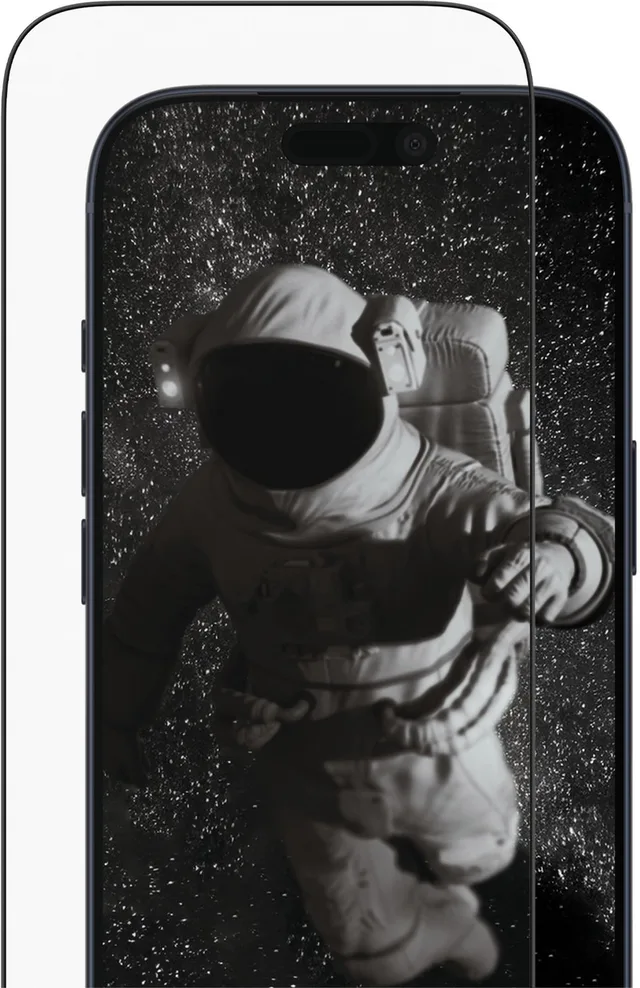
Screen protector for Apple iPhone 17 Pro, glass, PanzerGlass Ultra Wide Fit Screen Protector, Case Friendly
iPhone 17 ProGlass1From €32.54 · at 5 shops
- Spigen
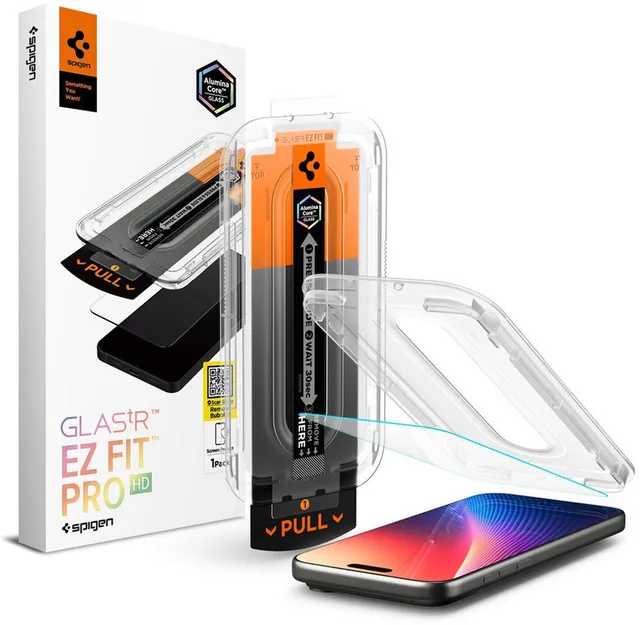
Screen Protector Geschikt voor iPhone 17 Pro Max
Glas.tR EZ Fit Pro · 9H+ Tempered GlassiPhone 17 Pro MaxGlass1€19.27 · at 1 shop
- OtterBox
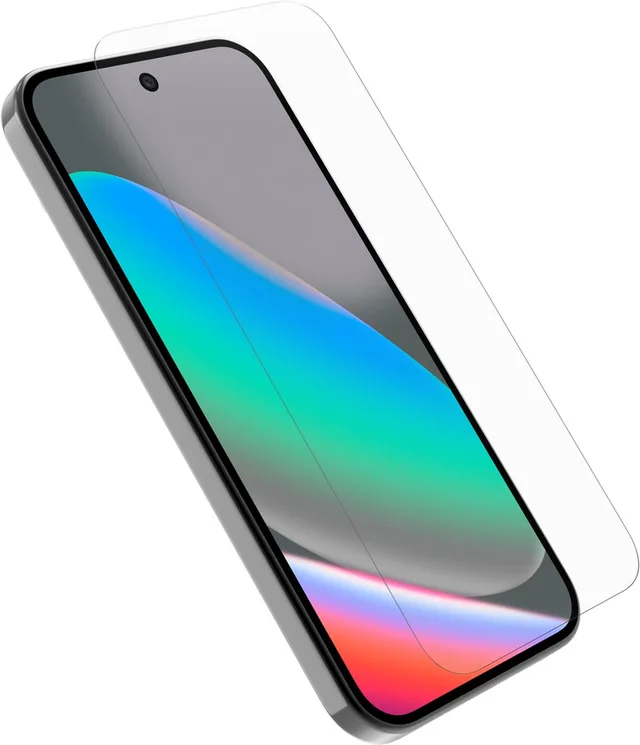
Premium Glass Screenprotector
TransparantPixel 10Glass1From €20.88 · at 3 shops
Lowest in 24 days
- PanzerGlass
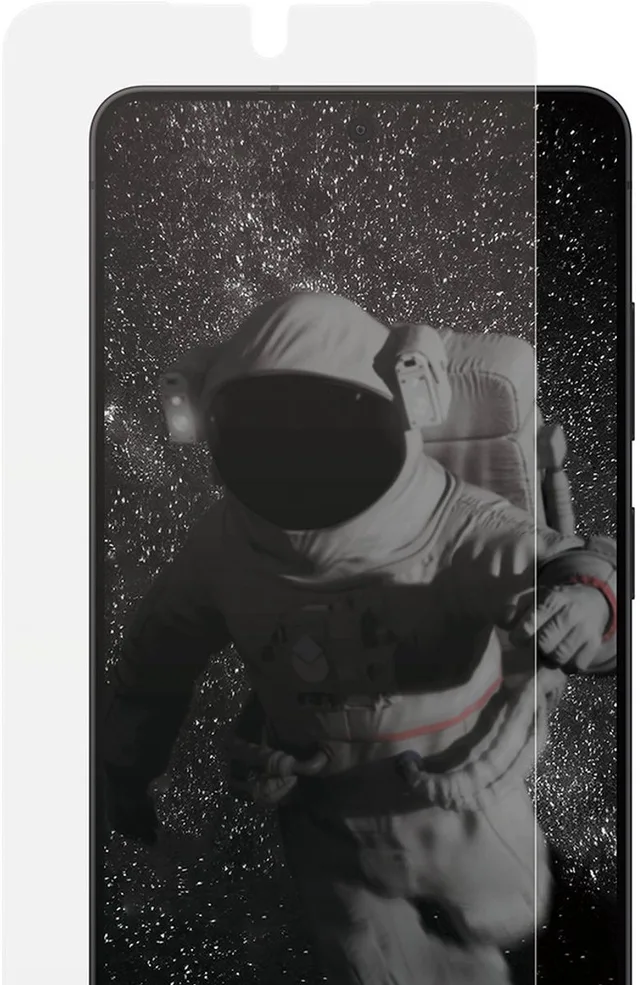
Screenprotector geschikt voor Samsung Galaxy S26 Ultra Glazen
PanzerGlass Ceramic ScreenprotectorGalaxy S26 UltraGlass€36.95 · at 1 shop
- PanzerGlass
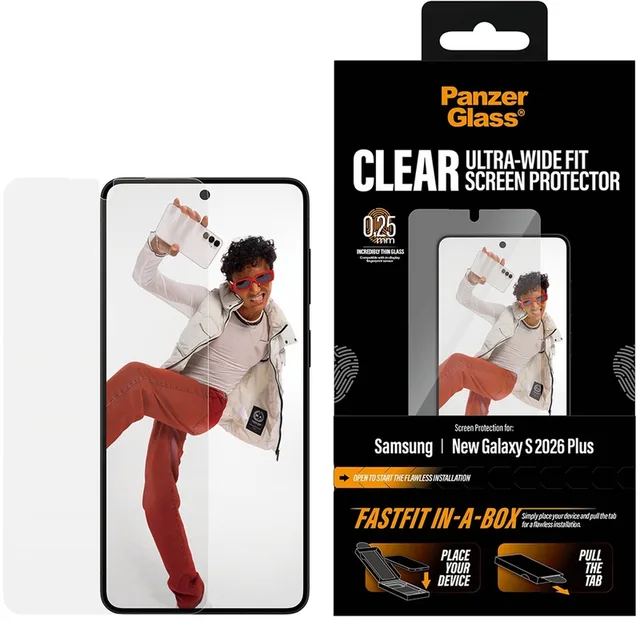
Screenprotector geschikt voor Samsung Galaxy S26 Plus Glazen
PanzerGlass Ultra-Wide FitGalaxy S26 PlusGlassFrom €30.20 · at 2 shops
- PanzerGlass
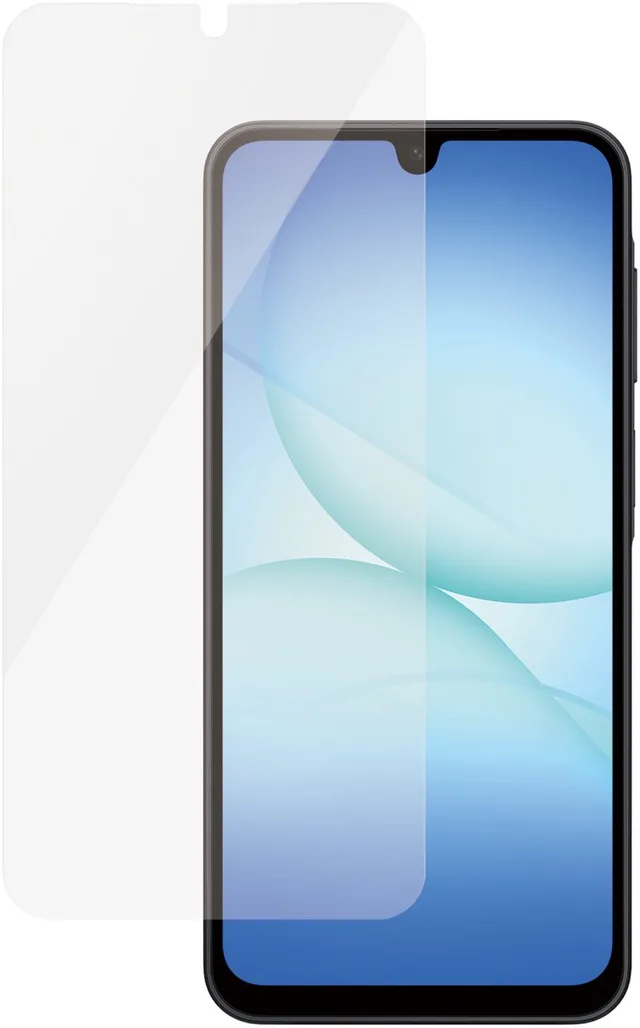
Screenprotector geschikt voor Samsung Galaxy A17 Glazen
PanzerGlass Ultra-Wide FitGalaxy A17Glass1From €16.98 · at 4 shops
Lowest in 24 days
Film: TPU and hydrogel
Film is made of plastic, such as TPU or hydrogel. It is thinner and flexible, so it follows curved edges better than glass. It absorbs less of a hard knock than glass does, but it does protect against scratches.
On foldables, film is the rule. Samsung applies a protective layer to the inner screen of its Galaxy Z Flip and Fold at the factory and says not to remove it yourself; to replace it, Samsung refers you to a service centre and warns that a non-official film can cause touch problems. Other makers also make films for foldables, such as the PanzerGlass FlipFoldFlex for the Galaxy Z Flip 5, which PanzerGlass describes as hydrogel TPU. For the Galaxy Z Fold 8, PanzerGlass sells a set of glass and film; which part goes on which screen is in its instructions.
Film and plastic
- PanzerGlass
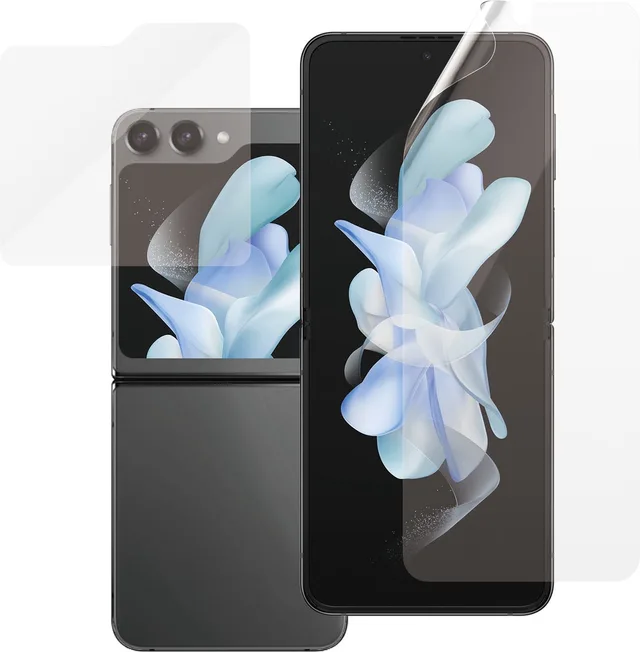
Screenprotector geschikt voor Samsung Galaxy Z Flip 5 Hydrogel TPU
PanzerGlass FlipFoldFlex ScreenprotectorGalaxy Z Flip 5TPU, Film€19.99 · at 1 shop
- PanzerGlass
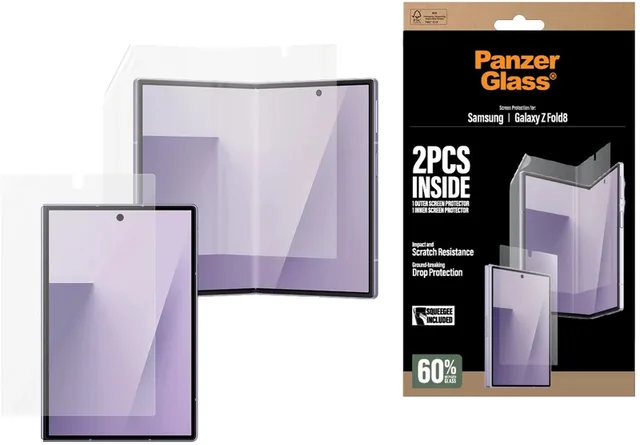
Screenprotector Glass & Film geschikt voor Samsung Galaxy Z Fold 8
Galaxy Z Fold 8Glass, FilmFrom €24.43 · at 2 shops
Lowest in 24 days
Fit: case friendly and applicators
A screen protector that runs right to the edge can be pushed up by a case. That is why makers make them "case friendly": slightly smaller than the screen, so the edge of the case doesn't get underneath. PanzerGlass puts it in the name, as well as "Ultra-Wide Fit" for the versions that cover as much of the screen as possible.
The hardest part is applying it straight and without dust. That is why many models come with a frame or applicator that you place on the phone. Spigen calls it EZ Fit, and PanzerGlass includes an applicator with the SAFE Privacy for the iPhone 18 Pro, among others.
Privacy filter
A privacy screen protector has a filter that narrows the viewing angle. Straight on you see everything; from the side, someone else mostly sees a dark screen. Useful on the train or in the office. PanzerGlass and Belkin have privacy versions, such as the PanzerGlass Privacy for the iPhone 17 Pro and the Belkin TemperedGlass Privacy for the iPhone 16, 15 and 14 Pro.
Privacy screen protectors
- PanzerGlass
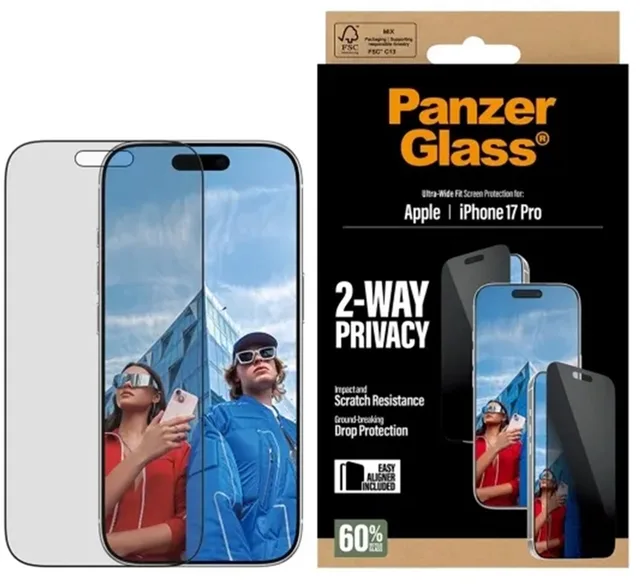
Screenprotector geschikt voor Apple iPhone 17 Pro Glazen
PanzerGlass Ultra-Wide Fit PrivacyiPhone 17 ProGlass1From €24.48 · at 4 shops
Lowest in 24 days
- PanzerGlass
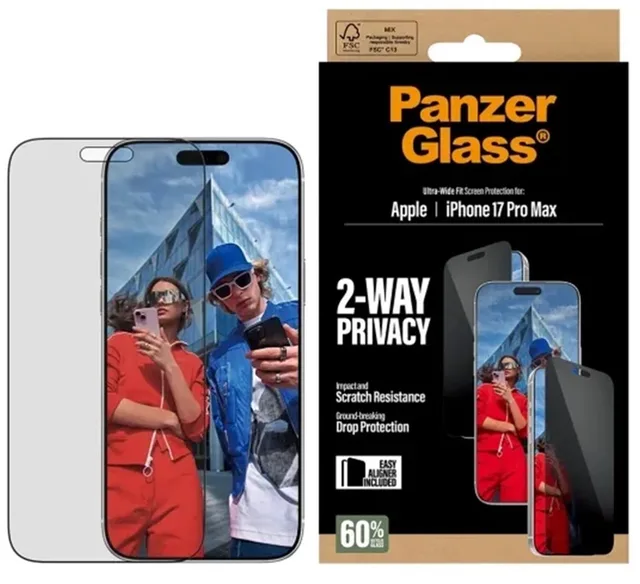
Screenprotector geschikt voor Apple iPhone 17 Pro Max Glazen
PanzerGlass Ultra-Wide Fit PrivacyiPhone 17 Pro MaxGlass1From €24.48 · at 4 shops
Lowest in 24 days
- PanzerGlass
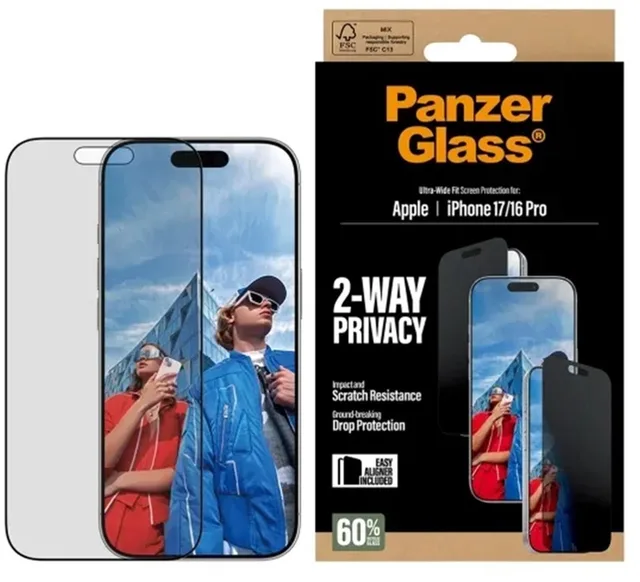
Screenprotector geschikt voor Apple iPhone 17 Glazen
PanzerGlass Ultra-Wide Fit PrivacyiPhone 17Glass1From €24.98 · at 4 shops
Lowest in 24 days
- Belkin
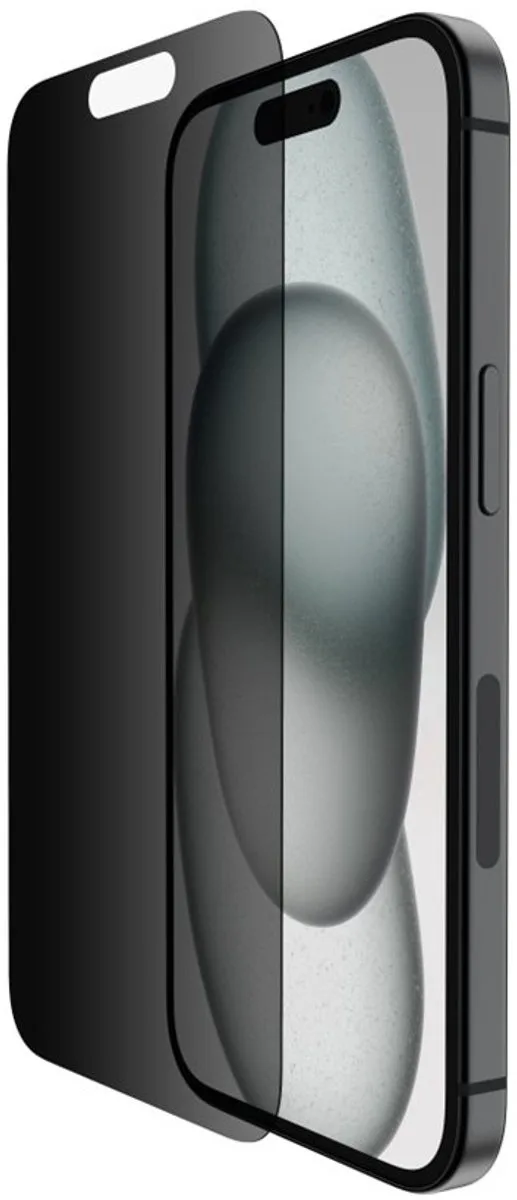
TemperedGlass Privacy Screenprotector
iPhone 16 / iPhone 15 / iPhone 14 ProiPhone 16FilmFrom €25.58 · at 3 shops
- PanzerGlass
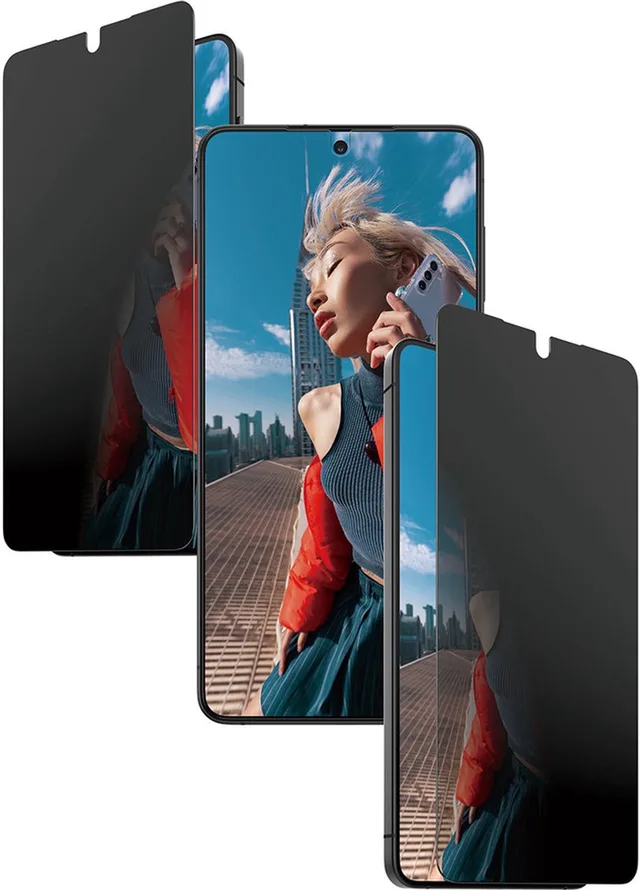
Screenprotector geschikt voor Samsung Galaxy S26 Plus Glazen
PanzerGlass Ultra-Wide Fit PrivacyGalaxy S26 PlusGlassFrom €44.99 · at 2 shops
- 4smarts
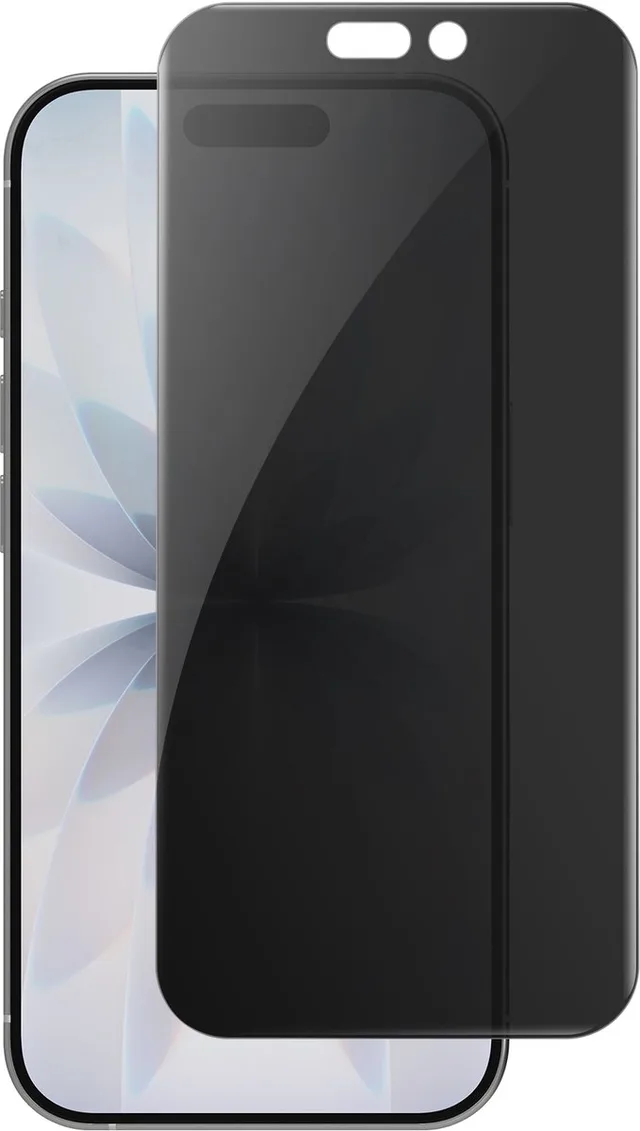
Screenprotector geschikt voor iPhone 17
Privacy Tempered Glass, TransparantiPhone 17Glass1From €27.70 · at 2 shops
Lowest in 24 days
Fingerprint sensor and camera
On phones with a fingerprint sensor in the screen, the screen protector must be suitable for it. According to Samsung, the thickness and structure of a screen protector can affect the in-screen sensor of its Galaxy phones, and Samsung does not guarantee that other makes work; check whether the maker mentions the sensor. Samsung advises registering your fingerprint again after a change.
For the cameras there are separate lens protectors, such as the PanzerGlass Hoops and Hama's camera glass for the iPhone 16. PanzerGlass also has a set with camera glass, such as the one for the iPhone 18 Pro. Every model is under screen protectors, with prices from several shops.
Frequently asked questions
Which is better, tempered glass or film?
For a flat screen you usually choose glass: it feels like the screen and takes knocks. Film fits curved screens and folding screens better.
What does 9H mean?
It is the hardest step in a scratch test with pencils. It says something about scratches, not about how well the glass survives a fall.
Does the fingerprint sensor work with a screen protector?
With an in-screen sensor, only if the screen protector is suitable for it. Check whether the maker mentions it, and register your fingerprint again afterwards.
Can I remove the film on my foldable?
Samsung says not to remove the protective layer on the inner screen of its foldables yourself. It can be replaced through Samsung's service.
Keep looking
Tenbars doesn’t test devices itself. This guide sets out what manufacturers state.
Products from this guide
Popular products with a current price at the shops. Compare the prices on the product page.
- PanzerGlass
Screen protector for Apple iPhone 17 Pro, glass, PanzerGlass Ultra Wide Fit Screen Protector, Case Friendly
iPhone 17 ProGlass1From €32.54 · at 5 shops
- PanzerGlass
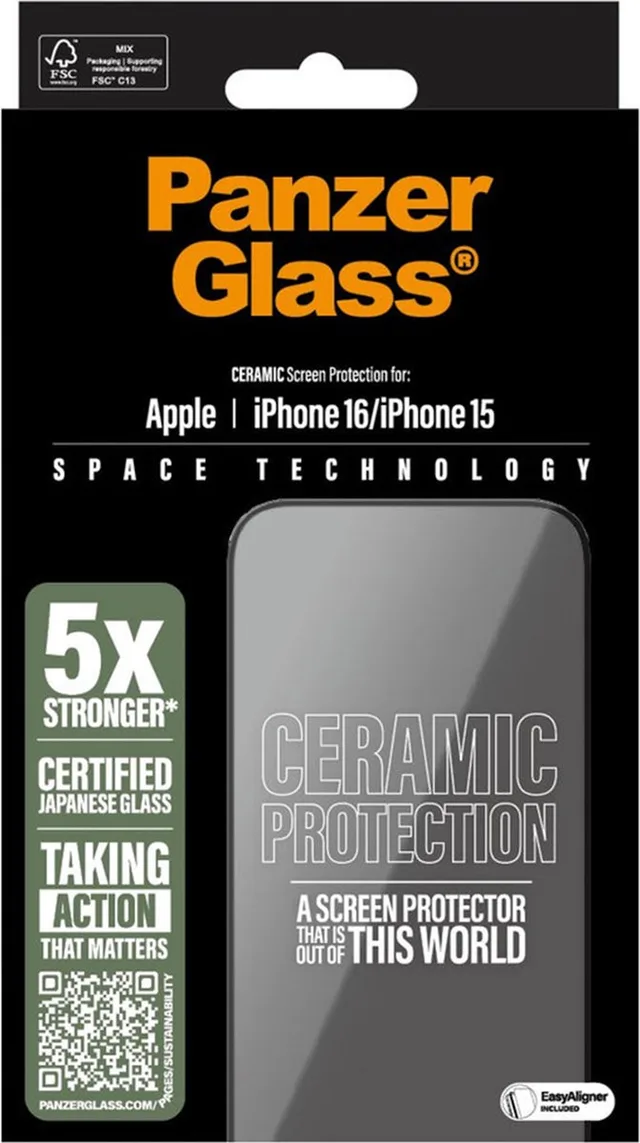
Screen protector for Apple iPhone 16, glass, PanzerGlass Ceramic Screen Protector, Case Friendly
iPhone 16Glass1From €33.25 · at 2 shops
- PanzerGlass
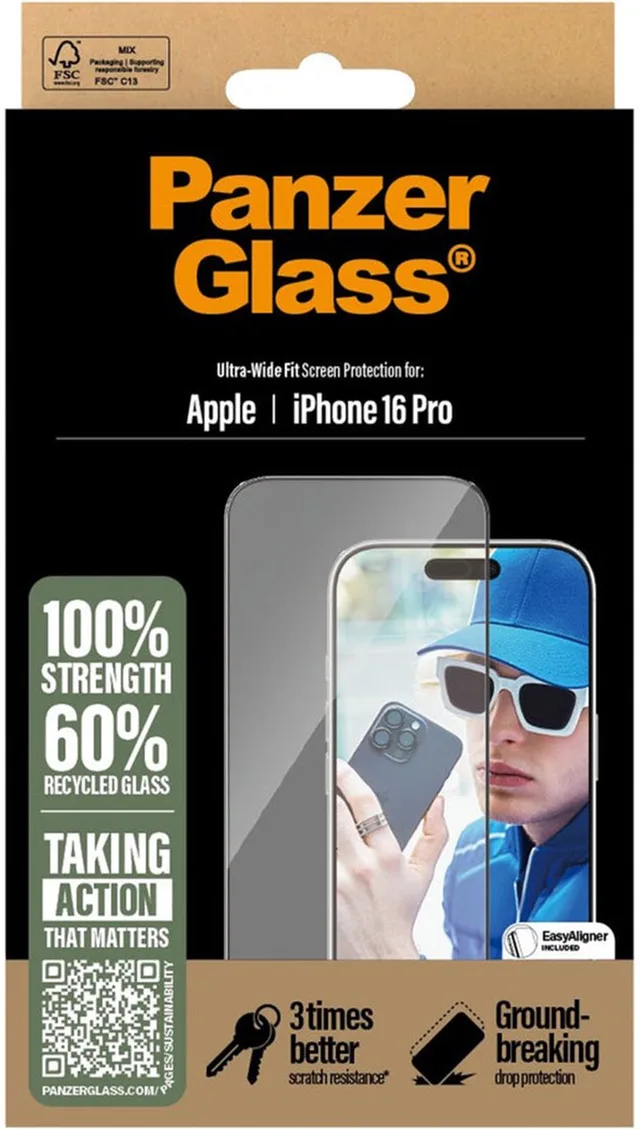
Screenprotector geschikt voor Apple iPhone 16 Pro Glazen
PanzerGlass Ultra-Wide FitiPhone 16 ProGlass1From €15.48 · at 4 shops
Lowest in 24 days
- PanzerGlass
Screenprotector geschikt voor Apple iPhone 17 Pro Glazen
PanzerGlass Ultra-Wide Fit PrivacyiPhone 17 ProGlass1From €24.48 · at 4 shops
Lowest in 24 days
- PanzerGlass
Screenprotector geschikt voor Apple iPhone 17 Pro Max Glazen
PanzerGlass Ultra Wide FitiPhone 17 Pro MaxGlass1From €31.99 · at 5 shops
More buying guides
- Choosing a phone case: MagSafe, book case or drop protection You choose a case on shape, magnets and protection. Here is how to read MagSafe, Qi2 and MIL-STD on the box, and what a book case with card slots does. Read the guide
- Choosing a power bank: mAh, watts and taking it on a plane How many mAh and how many watts do you need, and can it go on a plane? Here is how to convert mAh to watt-hours and choose a power bank for your phone or laptop. Read the guide